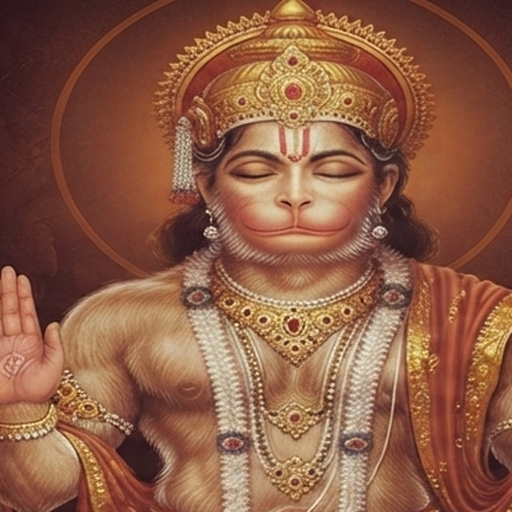
The Bearded Balaji: The Miraculous Legend of Salasar Hanuman Temple, Rajasthan
Quick Facts
- Location
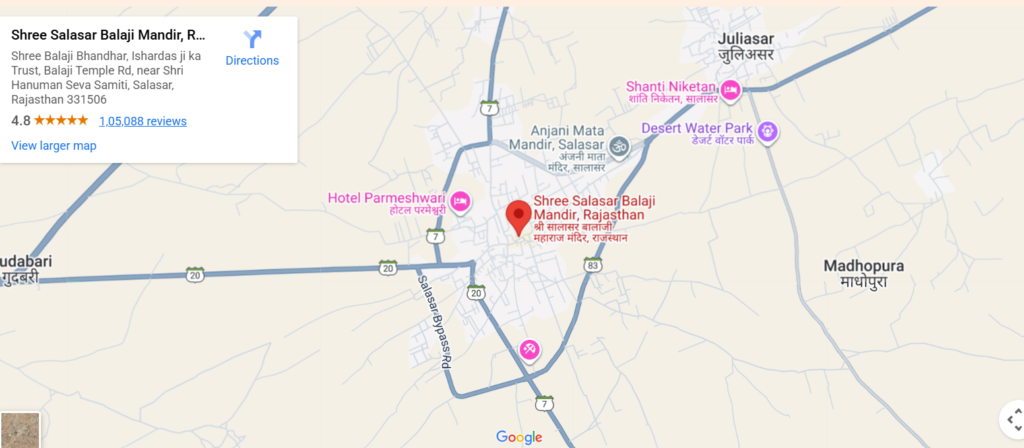
- Salasar town, Churu district, Rajasthan
- Unique feature
- Only Hanuman idol in India with a beard and moustache
- Idol discovered
- 1755, in a field at Asota
- Temple founder
- Mohandas Ji, a devout Brahmin
- Eternal flame
- Akhand Dhuni, burning continuously since 1759
- Nearest bus stand
- Salasar Bus Stand — just 700 m from the temple
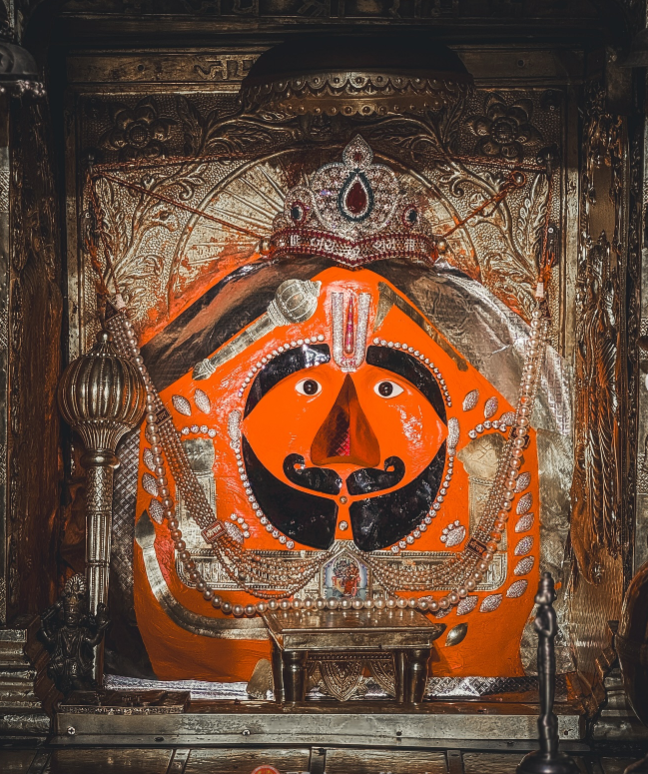
Did you know there is a unique temple dedicated to Hanuman Ji where he sports a beard and a moustache? This is Salasar Balaji, one of the most visited and revered Hanuman shrines in Rajasthan — a form of the deity found nowhere else in India.
The Story of Mohandas Ji
The story of Salasar Balaji dates back approximately 275 years. It centres around a devout Brahmin named Mohandas Ji. Mohandas Ji moved to Salasar to live with his sister, Kani Bai, after her husband passed away, leaving her widowed with a five-year-old son. Mohandas Ji began cultivating the land alongside his nephew.
Mohandas Ji was an ardent devotee of Hanuman Ji, constantly chanting "Sitaram Hanuman" even while ploughing. His devotion was so pure that Hanuman Ji was immensely pleased, often providing him shade with his tail and visiting to wrestle. However, Hanuman Ji was visible only to Mohandas Ji himself.
Concerned after observing her brother converse with an invisible figure, Kani Bai decided to arrange his marriage. Hanuman Ji had blessed Mohandas Ji so profoundly that anything the devotee spoke would come true. When Mohandas Ji stated that the girl intended for his marriage had died, no one believed him — until relatives travelled to her village and found her funeral procession already underway. Following this event, Kani Bai never again pressured Mohandas Ji to marry.
The Sadhus' Promise and the Idol's Discovery
Mohandas Ji's desire was born from a transformative encounter: he had first received a vision of Hanuman Ji in the form of a sadhu with a beard and moustache. He yearned for Hanuman Ji to appear again in that very form. Hanuman Ji promised his devoted follower that he would grant him this vision again — this time in the form of an idol.
The fulfilment of this promise occurred in the year 1755. In a location called Asota, a farmer's plough struck a stone slab (shila). When he excavated the area, he discovered a striking statue of Hanuman Ji carrying Lord Shri Ram and Lakshman on his shoulders.
As soon as the farmer lifted the statue, he was struck by a severe stomachache. His wife recognised this as a divine play (leela) of Hanuman Ji. She immediately offered the statue Churma (a traditional sweet), and as soon as the offering was made, the farmer's stomach pain instantly vanished.
Establishing the Temple
News of the miraculous stone reached the King of Asota, who brought the idol back to his palace. That night, Hanuman Ji appeared in the King's dream, instructing him to deliver the idol to his greatest devotee, Mohandas Ji, in Salasar. Simultaneously, Hanuman Ji appeared in a dream to Mohandas Ji, confirming that the idol would soon reach him.
The King dispatched the stone on a bullock cart, which travelled until it spontaneously stopped at the precise location where the current Salasar temple is now situated. Mohandas Ji established the idol at that spot and adorned it with pure gold. This is the sacred ground where the magnificent Salasar Balaji Temple stands today.
The defining feature of this idol is its distinctive facial hair. Mohandas Ji personally added the beard and moustache to the statue, ensuring that all future devotees could receive the darshan (sacred viewing) of Hanuman Ji in the form of the sadhu he had first encountered.
A Legacy of Service and Sacrifice
Four years after the temple's establishment, in 1759, Mohandas Ji entrusted the service (seva) of Balaji to Kani Bai's family and entered samadhi (conscious, voluntary departure from the body). The eternal flame — the Akhand Dhuni — that has been burning since that time continues to alleviate the suffering of all who come to pray.
How to Reach Salasar Balaji Temple, Rajasthan
By Train — Nearest Railway Stations
| Station | Distance from Temple | Approx. Travel Time by Road |
|---|---|---|
| Sujangarh | 27 km | 35–40 min |
| Ratangarh | 44 km | 1 hr 15 min |
| Lakshmangarh | 35 km | 40–45 min |
| Sikar | 60 km | 1 hr |
| Jaipur | 168 km | 3 hrs |
From any station: take an auto or taxi (₹400–800 from Sujangarh/Sikar) or a shared jeep (₹50–100).
By Bus — Nearest Bus Stands
- Salasar Bus Stand — only 700 metres (5–7 min walk or ₹20 auto)
- Sujangarh — 25 km (35–40 min)
- Jaipur — 169 km (3–3.5 hrs)
Rajasthan Roadways (RSRTC) deluxe and AC Volvo buses run frequently from Jaipur, Sikar, Sujangarh, Delhi, Jodhpur, and other major cities. Private luxury buses are also available.
By Air — Nearest Airports
| Airport | Distance | Driving Time |
|---|---|---|
| Jaipur (Sanganer) | 184 km | 3 hr 15–20 min |
| Kishangarh | 163 km | ~3 hr 30 min |
| Bikaner | 190 km | ~3 hr 40 min |
| Jodhpur | 266 km | ~4 hr 45 min |
Best option: fly to Jaipur, then hire a prepaid taxi or take a direct AC bus to Salasar (₹300–500 by bus, ₹3,000–4,000 by cab).
Fastest & Most Convenient Route
- From Delhi/Jaipur: Direct AC buses or self-drive via NH-52 (excellent 4–6 lane highway)
- From Mumbai/Pune: Fly to Jaipur, then a 3-hour road trip
- Budget travellers: Train to Sujangarh or Sikar, then a shared taxi/auto
Frequently Asked Questions
What makes Salasar Balaji Temple unique?
Salasar Balaji is the only major Hanuman temple in India where the idol has a beard and moustache, a form devotee Mohandas Ji first saw in a vision and later recreated on the discovered idol.
Who was Mohandas Ji?
Mohandas Ji was a devout Brahmin who moved to Salasar to live with his widowed sister, Kani Bai. His unwavering devotion to Hanuman Ji, expressed by constantly chanting "Sitaram Hanuman", pleased the deity so much that Hanuman Ji would personally visit and wrestle with him.
How was the Salasar Balaji idol discovered?
In 1755, a farmer's plough struck a stone slab in a place called Asota, revealing a statue of Hanuman Ji carrying Lord Rama and Lakshman on his shoulders. The idol later reached Mohandas Ji in Salasar after the King of Asota was instructed to send it there in a dream.
Why does the Salasar Balaji idol have a beard and moustache?
Mohandas Ji personally added the beard and moustache to the idol so that all future devotees could receive darshan of Hanuman Ji in the same sadhu form he had first witnessed in his vision.
How old is Salasar Balaji Temple?
The temple's history dates back approximately 275 years, with the idol discovered in 1755 and Mohandas Ji establishing it at its current site shortly after.
What is the Akhand Dhuni at Salasar Balaji?
The Akhand Dhuni is an eternal sacred flame that has been continuously burning since 1759, when Mohandas Ji entered samadhi. Devotees believe it alleviates the suffering of all who pray before it.
How do I reach Salasar Balaji Temple by train?
The nearest railway stations are Sujangarh (27 km), Ratangarh (44 km), Lakshmangarh (35 km), Sikar (60 km), and Jaipur (168 km). From any of these stations, visitors can take an auto, taxi, or shared jeep to reach the temple.
How do I reach Salasar Balaji Temple by bus or air?
Salasar Bus Stand is just 700 metres from the temple, with RSRTC deluxe and AC Volvo buses running from Jaipur, Sikar, Sujangarh, and Delhi. By air, the nearest airport is Jaipur (Sanganer), about 184 km away, followed by a taxi or direct AC bus to Salasar.