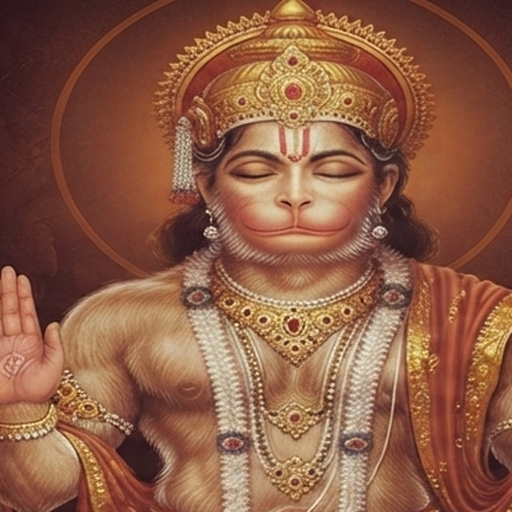
Hanuman Gayatri Mantra
The Vedic invocation for wisdom, courage and clarity of mind
ॐ आञ्जनेयाय विद्महे
वायुपुत्राय धीमहि।
तन्नो हनुमत् प्रचोदयात्॥
Om Anjaneyaya Vidmahe Vayuputraya Dheemahi
Tanno Hanumat Prachodayat
The Gayatri-form mantra of Hanuman, for wisdom, strength and inner clarity
What the mantra means
Breaking down the verse — word by word
A Gayatri mantra follows a fixed three-part Vedic structure: naming the deity, meditating on their form, and asking them to illuminate the mind. The Hanuman Gayatri applies this structure to Hanuman, calling on him both as Anjaneya, the son of Anjana, and as Vayuputra, the son of Vayu, the wind god — his two-fold nature as devoted son and embodiment of life-force (prana).
Put together, the mantra means: “Om, we meditate upon Anjaneya, the son of Anjana and the son of Vayu — may that mighty Hanuman illuminate our intellect.” Unlike the Beej Mantra, which is chanted mainly for immediate strength and protection, the Gayatri form is chanted to sharpen the mind and seek Hanuman’s guidance.
Benefits of chanting
Why devotees turn to this mantra
Wisdom and clarity
Said to sharpen the intellect and bring clear-headed decision-making.
Courage and confidence
Invokes Hanuman’s fearlessness, easing anxiety and self-doubt.
Protection while travelling
Traditionally recited before a journey for safe passage.
Relief during Shani Sade Sati
Many devotees chant it during difficult Saturn transits, by tradition.
Strength and vitality
Connects the chanter to prana, the life-force Hanuman embodies as Vayuputra.
Devotion and discipline
Regular chanting is said to cultivate focus, patience and steady devotion.
Chanting method (Jaap Vidhi)
How the mantra is traditionally chanted
Choose the time
Brahma Muhurta, the period before sunrise, is considered most auspicious; Tuesdays and Saturdays are also favoured.
Purify yourself
Bathe and wear clean clothes before sitting down to chant.
Face and seat
Sit facing east or north on a clean mat. Light a lamp or incense before an image of Hanuman if you have one.
Chant with a mala
Use a rudraksha or tulsi mala to chant 108 times, keeping a slow, unhurried rhythm rather than rushing the count.
Close with stillness
Sit quietly for a few minutes after finishing before returning to the rest of your day.
A verse to remember
A line from the Hanuman Chalisa on his wisdom
जय हनुमान ज्ञान गुन सागर। जय कपीस तिहुं लोक उजागर॥
Victory to Hanuman, ocean of wisdom and virtue; victory to the lord of monkeys, whose glory lights up the three worlds.
Frequently asked questions
Common questions about the Gayatri Mantra
What is the Hanuman Gayatri Mantra?
It is “Om Anjaneyaya Vidmahe Vayuputraya Dheemahi Tanno Hanumat Prachodayat” — a mantra in the classical Gayatri format that invokes Hanuman as the son of Anjana and Vayu, asking him to illuminate the chanter’s intellect.
How is the Gayatri Mantra different from the Beej Mantra?
The Beej Mantra (“Om Ham Hanumate Namah”) is a short seed-sound invocation for strength and protection, while the Gayatri Mantra follows the three-part Vedic Gayatri structure and is chanted mainly for wisdom, clarity and guidance.
When should the Hanuman Gayatri Mantra be chanted?
Brahma Muhurta, the period before sunrise, is considered the most auspicious time, though Tuesdays and Saturdays are also traditionally favoured.
How many times should it be chanted?
Traditionally it is chanted 108 times using a mala. Beginners can start with 11 or 21 repetitions and build up gradually.
What are the benefits of chanting this mantra?
Devotees chant it for courage, mental clarity, protection during travel, and relief from difficult planetary periods such as Shani Sade Sati. These are traditional beliefs rather than guaranteed outcomes.
Continue reading
More on Hanuman’s mantras and hymns